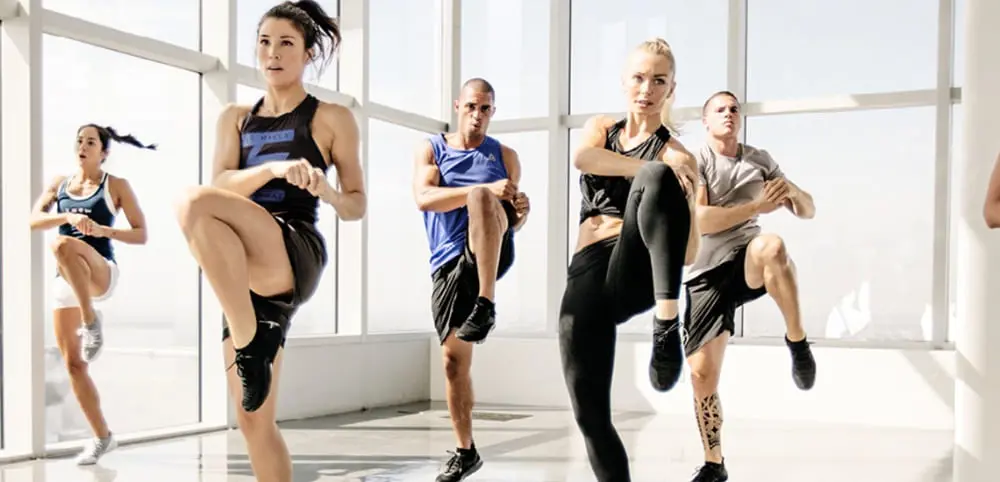
The bodycombat class is one of the most physiologically comprehensive group fitness formats available in Singapore’s gym landscape. Unlike formats that develop a single fitness quality, BodyCombat simultaneously advances coordination, muscular strength and endurance, and cardiovascular health through a single dynamic session. Understanding how each of these fitness dimensions is developed through the martial arts-inspired movement vocabulary of BodyCombat helps Singapore residents appreciate why this format delivers such broad-based health improvements with consistent attendance.
How BodyCombat Improves Coordination
Complex Movement Pattern Learning
Coordination is the ability of the neuromuscular system to produce precise, efficient movement through the accurate timing and sequencing of muscle activation. A bodycombat class challenges coordination far more comprehensively than most other group fitness formats because its martial arts-inspired movement sequences require the simultaneous management of upper body striking patterns, lower body stance and kicking movements, and core stability.
Learning new bodycombat class choreography each quarter, as Les Mills releases new programme content, continuously challenges the neuromuscular adaptability that drives coordination improvement. The brain forms new neural pathways to control novel movement sequences, and these pathways strengthen with repetition across subsequent sessions until the movements become fluent and automatic.
Bilateral and Cross-Body Movement Development
Many bodycombat class movement sequences require simultaneous or alternating engagement of both sides of the body through patterns that cross the body’s midline. These cross-body movement patterns activate the corpus callosum, the neural bridge connecting the brain’s hemispheres, and develop the inter-hemispheric coordination that improves overall movement quality, reaction time, and cognitive agility.
Regular bodycombat class participation develops a quality of balanced, bilateral movement competence that is rarely challenged by unilateral or purely linear exercise formats, producing coordination improvements that many participants notice in sporting performance and everyday movement outside the gym.
Rhythm and Timing Development
The music-choreography synchronisation of a bodycombat class develops rhythmic movement ability that is both intrinsically satisfying and practically beneficial for coordination. Executing striking and kicking patterns precisely to music tempo trains the timing accuracy and rhythmic sensitivity that underlies all coordinated movement.
How BodyCombat Builds Muscular Strength and Endurance
High-Repetition Dynamic Resistance
The striking and kicking movements of a bodycombat class are not passively executed gestures but actively resisted, dynamically loaded movements that engage muscles through their full range of motion against the inertia of the moving limbs. High-repetition execution of these movements across a full bodycombat class session develops meaningful muscular endurance in the muscle groups involved.
The upper body muscles including the shoulders, biceps, triceps, chest, and back all receive significant endurance training through punching sequences. The lower body muscles including the quadriceps, hamstrings, glutes, and hip flexors receive comparable training through kicking and stance movement sequences.
Explosive Power Development
The plyometric and explosive elements of a bodycombat class, including jump kicks, explosive direction changes, and powerful striking combinations, develop fast-twitch muscle fibre recruitment and explosive power that conventional moderate-intensity resistance training does not adequately stimulate. This explosive power development has practical applications in sports performance and functional physical capacity.
How BodyCombat Improves Cardiovascular Health
Sustained Elevated Heart Rate
A well-led bodycombat class maintains cardiovascular intensity at levels that produce meaningful cardiac adaptations throughout the session. The continuous dynamic movement of martial arts-inspired sequences keeps heart rate elevated at cardiovascular training intensity across the full class duration, providing the sustained aerobic stimulus that drives progressive heart health improvement.
Interval-Like Intensity Variation
The natural intensity variation between different bodycombat class sequences, from maximum-effort combination sequences to active recovery in flowing tai chi movements, creates an interval-like training pattern that challenges the cardiovascular system across multiple intensity zones. This multi-zone cardiovascular training produces more comprehensive cardiovascular adaptation than sustained single-intensity exercise.
For Singapore residents seeking a group fitness format that advances coordination, muscular strength, and cardiovascular health simultaneously through an engaging martial arts-inspired programme, True Fitness Singapore offers bodycombat classes across multiple island-wide locations with certified instructors who deliver the full physiological benefit of this comprehensive fitness format.
